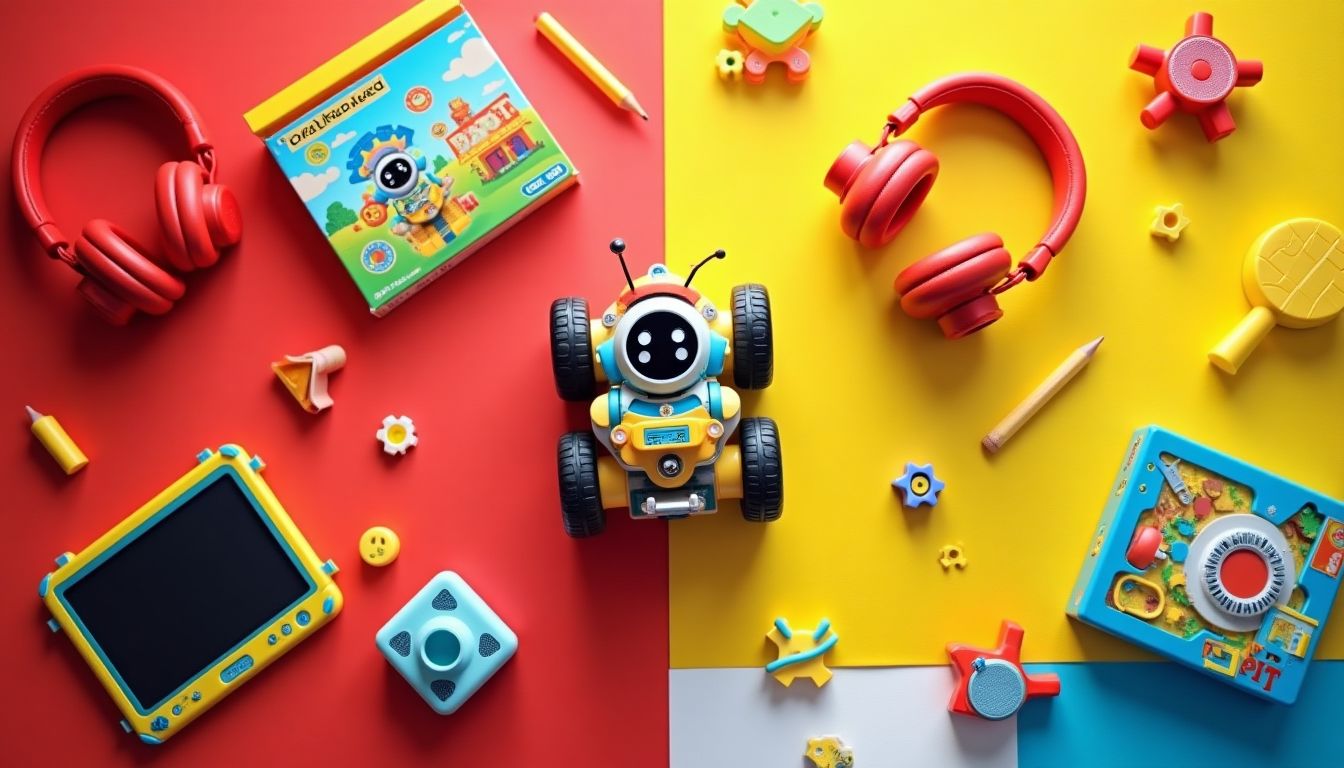
Musical toys are not just a way to entertain a child, but also a powerful tool for early development. They help little ones become familiar with the world of sounds, rhythms, and melodies, laying the foundations of musical perception. Properly selected musical toys for children stimulate auditory attention, coordination, and emotional intelligence. The ComfortShop editorial team analyzed the options available on the market to help parents choose the most beneficial models for hearing development.
Table of Contents
Why it is important to develop hearing from an early age
Auditory perception is one of the first to form in a child — even before birth, a baby reacts to sounds. In the first years of life, the brain is especially sensitive to audio information, so this period is the most favorable for developing musical abilities. Toys that develop hearing help a child learn to distinguish pitch, timbre, and volume of sounds, which is the basis for further speech and musical development.
Regular activities with musical toys train phonemic hearing, which directly affects a child's ability to learn reading and foreign languages. In addition, such games develop memory, attention, and the ability to concentrate on sound stimuli.
According to the recommendation of the ComfortShop editorial team, it is worth starting to get acquainted with musical instruments as early as 6–8 months, when the child begins to actively manipulate objects and take an interest in cause-and-effect relationships.
How musical toys affect auditory perception
When a child presses a button, hits a drum, or shakes a rattle, they receive instant sound feedback. This forms an understanding of the connection between action and result, and also trains the ability to distinguish sounds of different natures. Hearing development in children occurs most effectively precisely through active interaction with the source of sound, rather than passive listening.
Toys that reproduce the sounds of various musical instruments — piano, xylophone, guitar, flute — are especially valuable. This allows a child to form an idea of the timbral diversity of music from an early age.
After analyzing open sources, the ComfortShop editorial team notes that the best results come from toys with a clean, non-metallic sound that does not overload a little one's auditory system. Avoid models with overly harsh or loud sounds — they can cause auditory fatigue and a negative reaction.
Types of musical toys for hearing development
The modern market offers a huge selection of children's musical instruments, each of which influences the development of auditory skills in its own way. Let's look at the main categories that are worth including in a child's play arsenal.

Classic percussion instruments — the foundation of rhythmic development.
Drums, tambourines, maracas, and xylophones teach a child to feel rhythm and control the force of a strike. This is the most accessible way to introduce a little one to the world of music: you just need to hit to get a sound. Such toys develop movement coordination and sensorimotor integration.
Keyboard instruments — children's pianos and synthesizers — introduce a child to the concept of melody and pitch. By pressing different keys, a little one learns to distinguish high and low notes, which is a key skill for developing musical hearing.
How to choose a quality musical toy
Before buying musical toys, it is worth paying attention to several important criteria. First of all, evaluate the quality of the sound: it should be clear, pleasant, and not too loud. Toys with electronic sounds should have volume adjustment to protect a child's sensitive hearing.
The material of manufacture also plays an important role. Wooden instruments usually produce a warmer and more natural sound compared to plastic counterparts. However, plastic models are often lighter and safer for the youngest children.
The ComfortShop editorial team advises choosing toys according to the child's age: soft rattles and musical mobiles are suitable for infants, simple percussion and keyboard instruments for children aged 1–3, and sets of several instruments for preschoolers for their first ensemble experiments. You can check current prices and availability on sellers' websites by following the affiliate links.
Practical tips for activities with musical toys
In order for toys for developing musical hearing to bring maximum benefit, it is important to properly organize the play process. Here are a few recommendations that will help turn play into effective learning:
- Practice regularly, but in short sessions — 10–15 minutes is enough for little ones
- Play together with your child, setting an example and creating an emotional connection
- Alternate different types of instruments to develop all aspects of hearing
- Sing songs and reproduce simple rhythmic patterns together
- Encourage your child to experiment with sounds independently
It is important not to turn the activity into a strict lesson — music should be associated in a child's mind with pleasure and freedom of self-expression. It is positive emotions that strengthen the neural connections formed during musical activity.
Popular models of musical toys on the market
Based on an analysis of characteristics, ComfortShop recommends paying attention to several categories of products that consistently receive positive reviews from parents. Children's xylophones with metal plates produce a clear, ringing sound and are durable in use. Electronic pianos with a recording function allow a child to create their own melodies and develop creative thinking.
Musical instrument sets that include several items at once are the optimal solution for getting acquainted with different types of sound. They usually contain maracas, a tambourine, castanets, and other simple instruments that a child can master independently.
For the youngest, soft musical books and toy phones with melodies are popular — they introduce the world of sounds in a safe format. Before purchasing, be sure to check the delivery and warranty terms on the specific seller's website.
Conclusion:
Musical toys are an indispensable tool for the harmonious development of a child's auditory perception from the first months of life. By choosing quality musical toys for children, you invest in the development of your little one's musical abilities, speech, and emotional intelligence. The ComfortShop editorial team recommends combining different types of instruments and practicing regularly together with your child to achieve the best results.
Frequently Asked Questions
At what age can a child be given musical toys?
Basic rattles and noise toys are suitable for babies from 3–6 months, while children's musical instruments (xylophone, pipe, children's piano) are usually aimed at ages 1–3 and older. Exact age recommendations are always indicated in the product description at the seller's.
Which musical toys best develop hearing in children?
Toys with sounds of different pitch and timbre train hearing the most: xylophone, metallophone, children's bells, drum, and sorters. According to the ComfortShop editorial team, it is instruments with the ability to produce sound with one's own hands that most effectively form the discrimination of tones.
What are the benefits of toys that develop hearing for a child?
They help distinguish pitch, rhythm, and timbre of sounds, which positively affects speech development, attention, and coordination. Regular games with such toys also prepare a child for music lessons in the future.
Where to buy musical toys for children and what to pay attention to?
ComfortShop does not sell products — we only review and compare models, and they can be purchased from sellers on marketplaces (for example, AliExpress). Before purchasing, check the materials, age restrictions, sound volume, and delivery and warranty terms directly on the seller's website.