
Home safety is not just about reliable doors and a quality alarm system. Often, the biggest troubles come from within: an unnoticed water leak can destroy expensive renovations in a matter of hours, while a gas concentration creates a deadly threat. That is why water leak sensors for the home and gas sensors for the home are becoming essential elements of modern housing. According to the recommendation of the ComfortShop editorial team, installing these devices does not require special skills and is accessible to every apartment or house owner. In this article, we will detail the types of sensors, installation principles, and integration into a smart home.
Article Contents
Why Leak and Gas Sensors Are Needed
The main function of these devices is the early detection of an emergency situation and prompt notification of the owner. A modern leak protection system not only signals a problem but also automatically shuts off the water supply using electrically driven valves. This helps avoid flooding neighbors and damaging property, even if you are not at home.
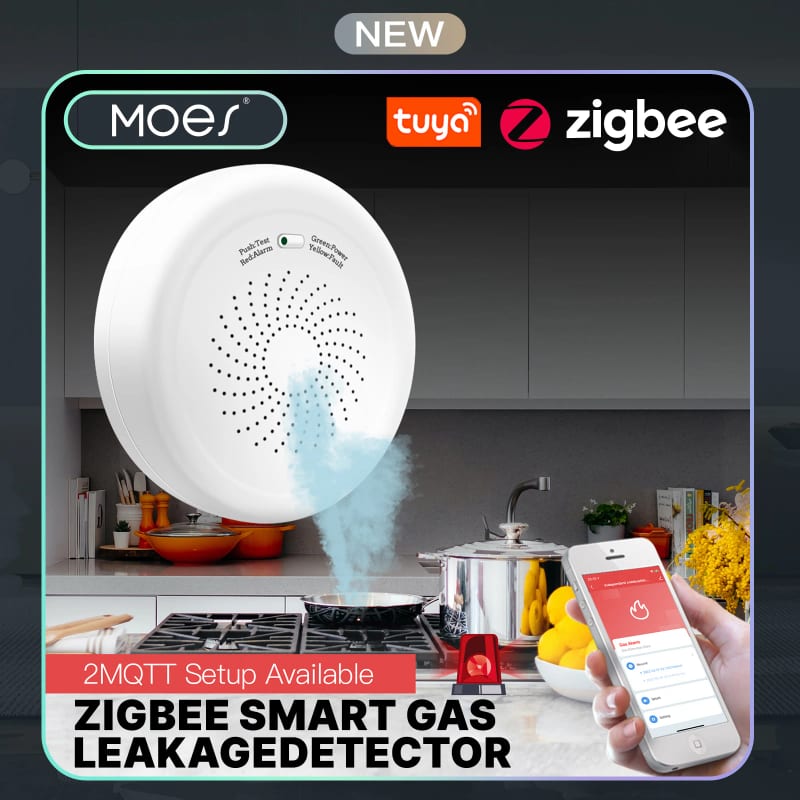
Gas analyzers, in turn, react to exceeding the maximum permissible concentration of methane or carbon monoxide. They not only emit a loud audible signal but can also initiate the shutdown of the gas valve. ComfortShop reviewers emphasize: the presence of such sensors is critical for rooms with gas stoves, boilers, or water heaters, where the risk of leakage significantly increases.
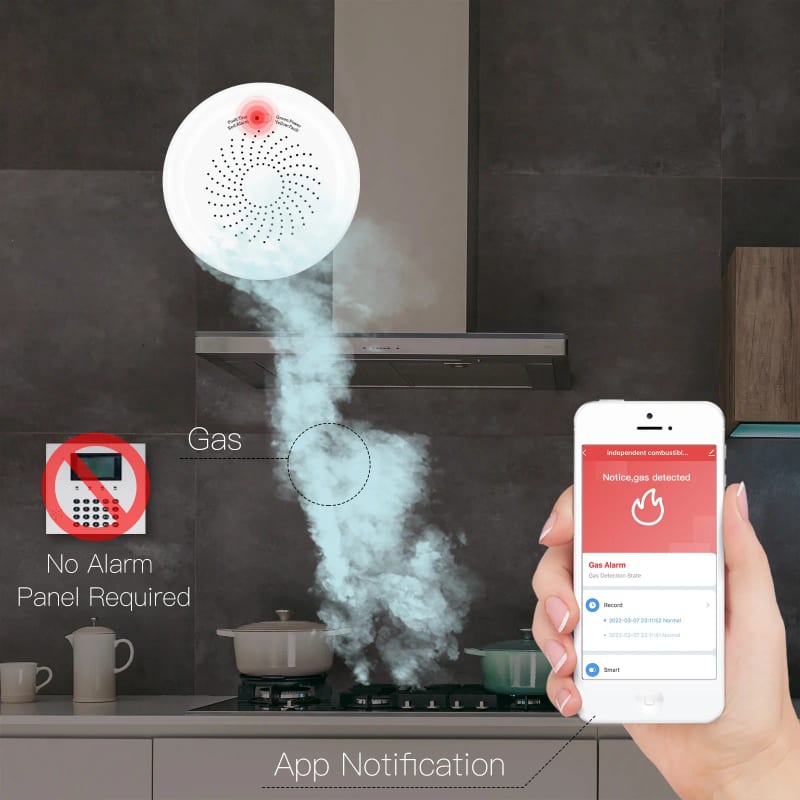
Separately, it is worth highlighting scenarios for integration into the concept of a smart home leak sensors and gas sensors turn into a central safety element. They can send push notifications to a smartphone, activate a siren, or start forced ventilation via smart relays.
Types of Sensors and Their Features
Before figuring out how to install a leak sensor or gas sensor, it is important to choose the right type of device. The installation method, power supply, and compatibility with other equipment depend on this.
Wired and Wireless Models.
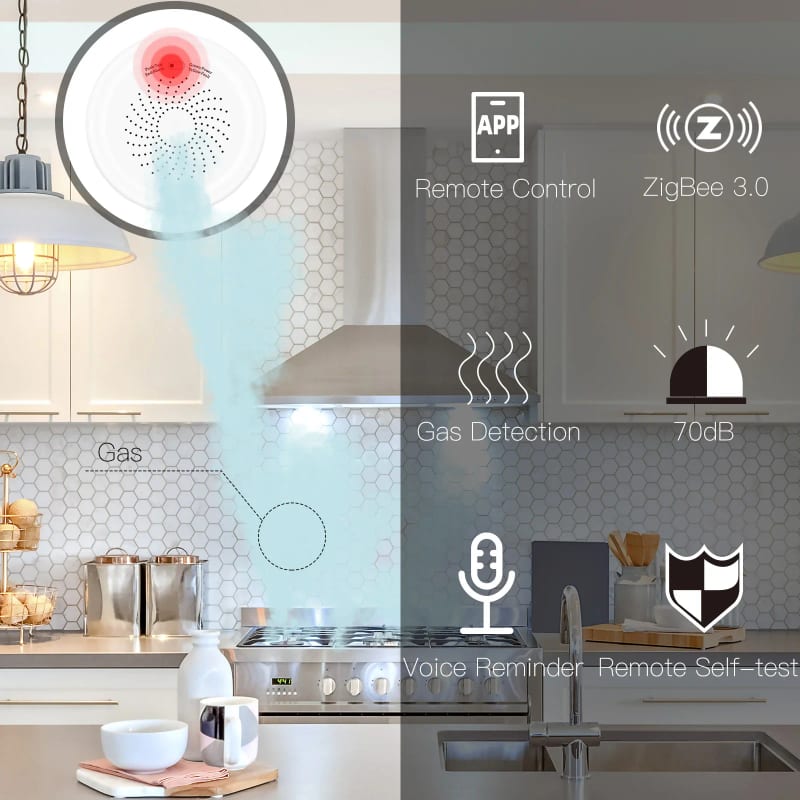
Wired sensors connect directly to the controller or control unit via cable. They are cheaper and more reliable in terms of communication, but require laying wires, which is not always convenient during finishing renovations. Wireless sensors operate via radio frequency (Zigbee, Wi-Fi, RF 433/868 MHz) and are powered by batteries. They can be easily placed anywhere without chasing walls.
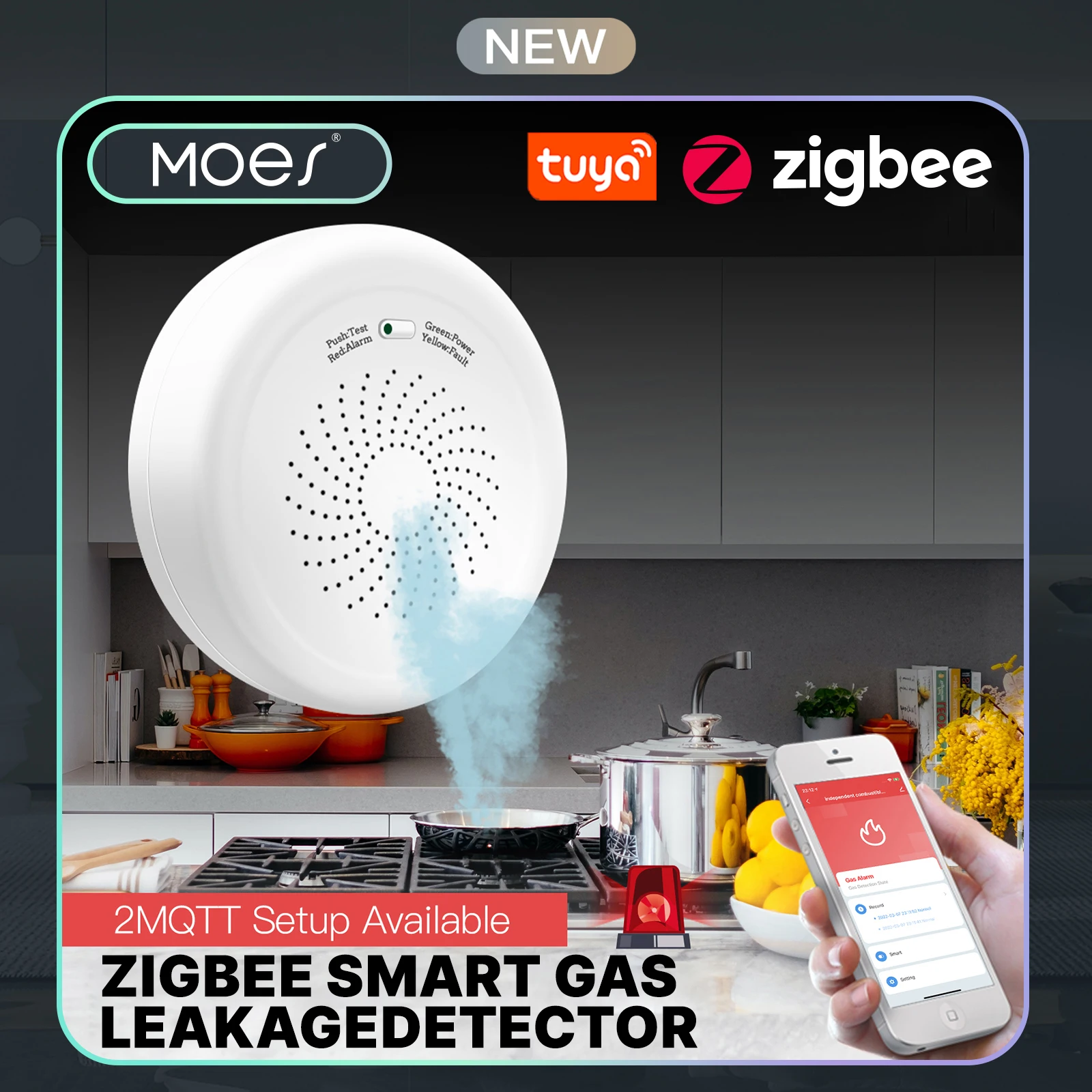
For gas analyzers, the sensor type is critically important: semiconductor, catalytic, or electrochemical. The latter is considered the most accurate for detecting carbon monoxide (CO). Methane (natural gas) sensors are usually installed near the ceiling, as the gas is lighter than air, while propane or CO sensors are placed closer to the floor.
How to Install a Water Leak Sensor
Let's look step by step at how to install a leak sensor yourself. The process is simple but requires attention to detail, especially when installing shut-off valves.
Installation of the Sensitive Element and Controller.
A wireless sensor is simply placed on the floor in a place where water is likely to accumulate: under the bathtub, sink, washing machine, or near risers. The contacts (metal legs) must tightly touch the surface. The controller is mounted on the wall or hidden in a plumbing cabinet. ComfortShop experts advise placing the control unit as close as possible to the motorized ball valves to avoid long power wires.
The most critical stage is cutting a ball valve with a servo drive into the water supply main. To do this, you need to shut off the risers, cut out a section of pipe, and install the valve using fittings. It is important to ensure access to the valve for manual control in case of automation failure. After connecting the wires to the controller, the system is tested: simply wet the sensor with a damp cloth, and the valve should close within a few seconds.
Setup is completed by linking to a mobile app, if the system supports smart home leak sensors via Wi-Fi or a Zigbee gateway. This will allow you to receive emergency notifications even while on vacation.
How to Install a Gas Sensor
The principles of how to install a gas sensor differ somewhat from water sensors due to the physical properties of the substances and safety requirements. A mistake in choosing the location can be life-threatening.
Choosing a Location and Connecting Power.
A natural gas (methane) sensor is mounted at a distance of 10-30 cm from the ceiling, but not right in the corner where air circulation is worse. For liquefied gas (propane/butane), the device is installed near the floor. A carbon monoxide sensor is placed at the level of a person's respiratory tract (approximately 1.5 meters from the floor). The device should not be installed near exhaust hoods, windows, or steam sources that distort readings.
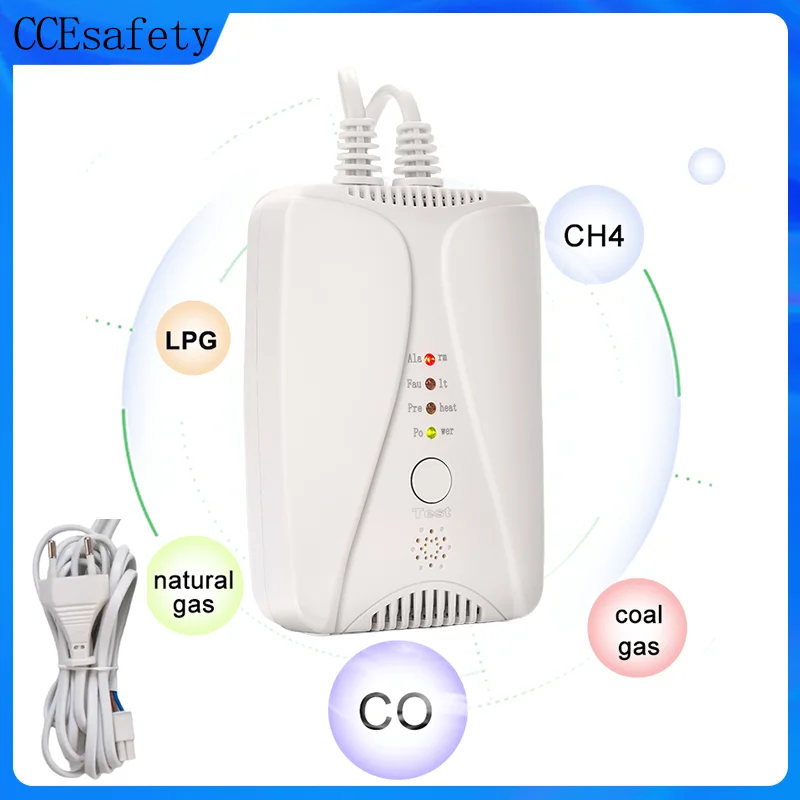
Most gas alarms require a constant 220 V power supply, so a nearby outlet is necessary. Connection via stationary wiring with grounding is allowed. If integration into a smart home gas sensors is planned, they must have a relay output ("dry contact") for connection to a control module or shut-off valve. After installation, calibration in fresh air and testing with a special gas mixture (not a lighter) is mandatory.
Integration into a Smart Home System
A single sensor is just an alarm. Full protection begins when smart home leak sensors and gas sensors are combined into a single response scenario. This takes safety to a fundamentally new level.
When a leak is detected, the system not only shuts off the water but also de-energizes outlets in the accident area to avoid a short circuit. When a gas sensor is triggered, the smart home automatically opens forced ventilation valves, turns off all electrical appliances, and sends an alarm signal to the security panel. Such scenarios can be configured via controllers from Ajax, Xiaomi, Rubetek, or Fibaro. As ComfortShop reviewers note, protocol compatibility is a key criterion for choosing equipment.
Conclusion:
Installing water leak and gas sensors is not a tribute to fashion, but an objective necessity for preserving property and life. By following simple installation rules, you can independently integrate these devices into your home, even without deep technical knowledge. The main thing is to choose the right location for the sensor, ensure reliable power, and configure automation scenarios. Remember that a working leak protection system and gas control pays for itself in the very first emergency minute, saving you from colossal losses and irreparable consequences.
Frequently Asked Questions
Can I install water leak sensors for the home myself?
Yes, most modern wireless water leak sensors for the home are easy to install yourself: just place them in potentially dangerous areas (under the sink, near the washing machine) and connect them to the smart home system via Wi-Fi or Zigbee.
How to install a gas sensor for the home so it works correctly?
A gas sensor for the home should be mounted on the ceiling or on the wall at a distance of 30-50 cm from the ceiling (for methane) or near the floor (for propane), away from windows and ventilation to avoid false alarms.
Is it mandatory to buy a leak protection system with a shut-off valve?
For full protection, it is recommended to use a leak protection system with a motorized valve that automatically shuts off the water when a leak is detected — this allows you to avoid flooding even in your absence.
How to integrate leak and gas sensors into a smart home system?
Most modern sensors (e.g., from Xiaomi, Aqara, or Ajax) support Zigbee or Z-Wave protocols, so to integrate them into a smart home system, you just need to purchase a compatible hub and configure notification scenarios via a mobile app.