Article Contents
- Why a regular memory card is not suitable for a drone
- Key specifications: speed, class, and standard
- MicroSD for a drone: what to pay attention to
- How to choose a card for an action camera and 4K video
- MicroSD class 10 for PCs and other devices
- Recommendations for selection and maintenance
- Conclusion:
Why a regular memory card is not suitable for a drone
Aerial video recording and high-resolution capture place extremely demanding requirements on storage media. A memory card for a drone must not simply store files, but do so continuously, stably, and at high speed. Even a slight write delay can lead to lost frames or complete corruption of the video file.
Most cheap cards that work perfectly in smartphones or navigation devices are not designed for a constant stream of large volumes of data. When recording 4K video, the write speed can reach 12-15 MB/s, and if the card cannot keep up with this stream, recording simply stops. This is why choosing the right storage medium is a critically important step in preparing for shooting.
According to the recommendation of the ComfortShop editorial team, before purchasing, you should clearly determine which device the card will be used in, since the requirements of a quadcopter and an action camera can differ significantly.
Key specifications: speed, class, and standard
To choose the best microSD for an action camera or drone, you need to understand the markings on the card body. Manufacturers indicate several parameters that determine its performance. The most important are the speed class, UHS standard, and video class.
The speed class is indicated by the letter C with a number inside: C10 means a minimum write speed of 10 MB/s. This is the basic minimum for modern devices, but it is not enough for 4K video. The UHS standard is marked as U1 or U3 — the latter guarantees speeds from 30 MB/s, which is mandatory for recording in high resolution.
Separately, it is worth paying attention to the video class V30, V60, or V90. For continuous 4K video recording, the minimum standard is V30, which guarantees a stable speed of 30 MB/s even under prolonged load. If you plan to shoot in 8K or with a high bitrate, you will need a V60 or V90 class card.
After analyzing open sources, the ComfortShop editorial team notes that most modern mid-range and premium drones require U3 V30 standard cards or higher.
MicroSD for a drone: what to pay attention to
A memory card for a quadcopter operates under extreme conditions: vibration, temperature fluctuations, and high humidity. Therefore, in addition to speed, reliability and resistance to external influences play an important role. Most manufacturers offer special card series designed specifically for use in drones and action cameras.

For most popular quadcopter models, such as DJI Mavic, Mini, or Air, manufacturers recommend cards with capacities from 64 GB to 256 GB. This is enough for recording several hours of 4K video. It is also important that the card has a high read speed — this will speed up transferring files to a computer.
A microSD for a drone must have protection against water, shocks, X-ray radiation, and magnetic fields. Such characteristics are usually indicated by the manufacturer on the packaging or in the technical documentation. This is especially important if shooting takes place in difficult weather conditions or at high altitudes.
How to choose a card for an action camera and 4K video
Action cameras, such as GoPro, DJI Osmo Action, or Insta360, also require high-speed memory cards. Recording 4K video at 60 frames per second places significant load on the storage medium, so the card must meet the camera manufacturer's minimum requirements.
For microSD for 4K video, the optimal choice would be cards marked U3 V30 or higher. They guarantee stable recording without dropped frames even at high bitrates. If the camera supports recording in 5.3K or 8K format, you should consider V60 or V90 class cards, which provide even higher speeds.
The card capacity for an action camera depends on the duration of shooting. For short sessions, 64 GB is sufficient, but if you plan a long trip or all-day shooting, it is better to choose a 128 GB or 256 GB card. This will allow you not to worry about running out of free space at the most critical moment.
A microSD for a camera should also provide fast reading so that the process of transferring captured footage to a computer or smartphone does not take too much time. A read speed of 100 MB/s or higher is considered a good indicator for modern cards.
MicroSD class 10 for PCs and other devices
Although the main focus is on drones and cameras, memory cards are also actively used in laptops, tablets, and other devices. A microSD class 10 for PC is a universal solution for expanding storage, storing documents, photos, and music.
For use in a computer, ultra-high write speeds are not needed as in the case of video recording. A C10 or U1 class card is quite sufficient for most everyday tasks. However, if you plan to run applications or games directly from the card, you should pay attention to models with higher read speeds.
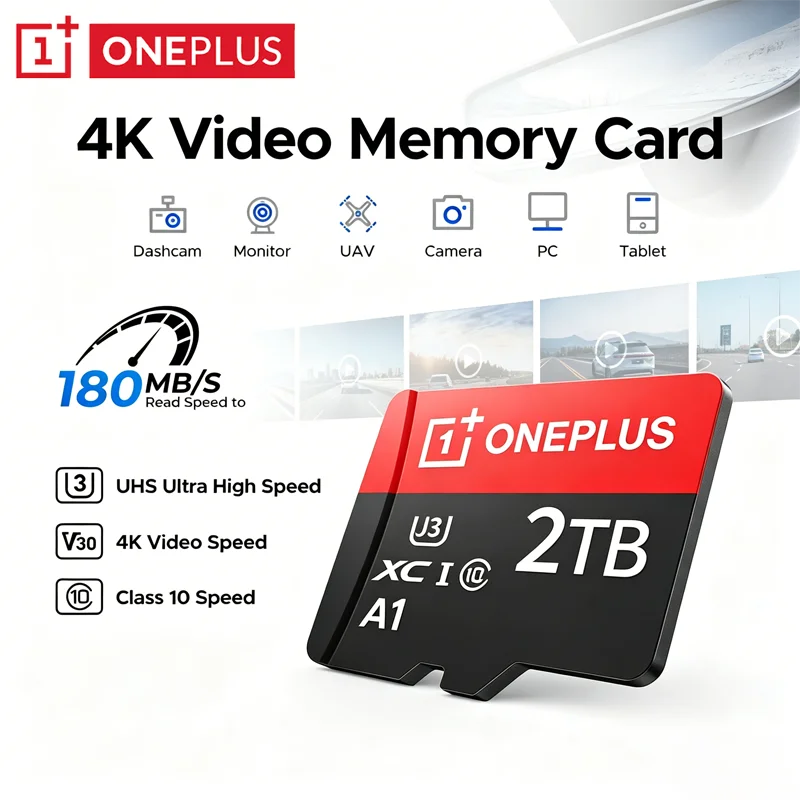
It is also important to consider the compatibility of the card with the device. Most modern laptops have a microSD slot, but for desktop computers, a special adapter may be required. Before purchasing, you should check the technical specifications of the device to avoid incompatibility.
Recommendations for selection and maintenance
Choosing the right memory card is only half the battle. It is equally important to use it properly to extend its service life and avoid data loss. Regularly formatting the card in the device where it will be used helps maintain stable operation.
Formatting should be done not on a computer, but directly in the camera or drone. This ensures the correct file system and optimal performance. It is also recommended not to fill the card completely — leave at least 10-15% of free space for stable operation.
Cards should be stored in a protective case, away from direct sunlight and heat sources. When removing the card from a device, it is important to make sure that recording has finished; otherwise, files can be damaged. Following these simple rules will help preserve data and extend the service life of the storage medium.
Висновок:
Choosing a memory card for a drone or action camera is a responsible task that determines the quality of the captured footage. For 4K video recording, you need to choose cards of the U3 V30 standard or higher, with a capacity of 64 GB or more and protection against external influences. For everyday use in a PC, C10 class cards are sufficient, but with consideration for device compatibility. According to the recommendation of the ComfortShop editorial team, you should choose products from trusted brands and pay attention to warranty terms to get a reliable storage medium for important data.
Frequently Asked Questions
What write speed is needed for a microSD card in a drone for 4K video?
For stable 4K video recording, choose a card with a write speed of at least 30 MB/s, but preferably with a V30 or U3 speed class.
How does microSD class 10 differ from UHS-I and UHS-II for a camera?
Class 10 guarantees a minimum write speed of 10 MB/s, while UHS-I (up to 104 MB/s) and UHS-II (up to 312 MB/s) provide much higher bandwidth, which is critical for burst shooting and 4K.
What capacity of microSD card is better to choose for a quadcopter?
For most drones, 64 GB or 128 GB is optimal — this allows recording long flights without filling up, but make sure your drone supports this capacity.
Can I use the same microSD card for both an action camera and a PC?
Yes, but it is better to have a separate card for the PC, since intensive use in a camera wears out the resource faster, and for a computer, high read speed is important for transferring files.