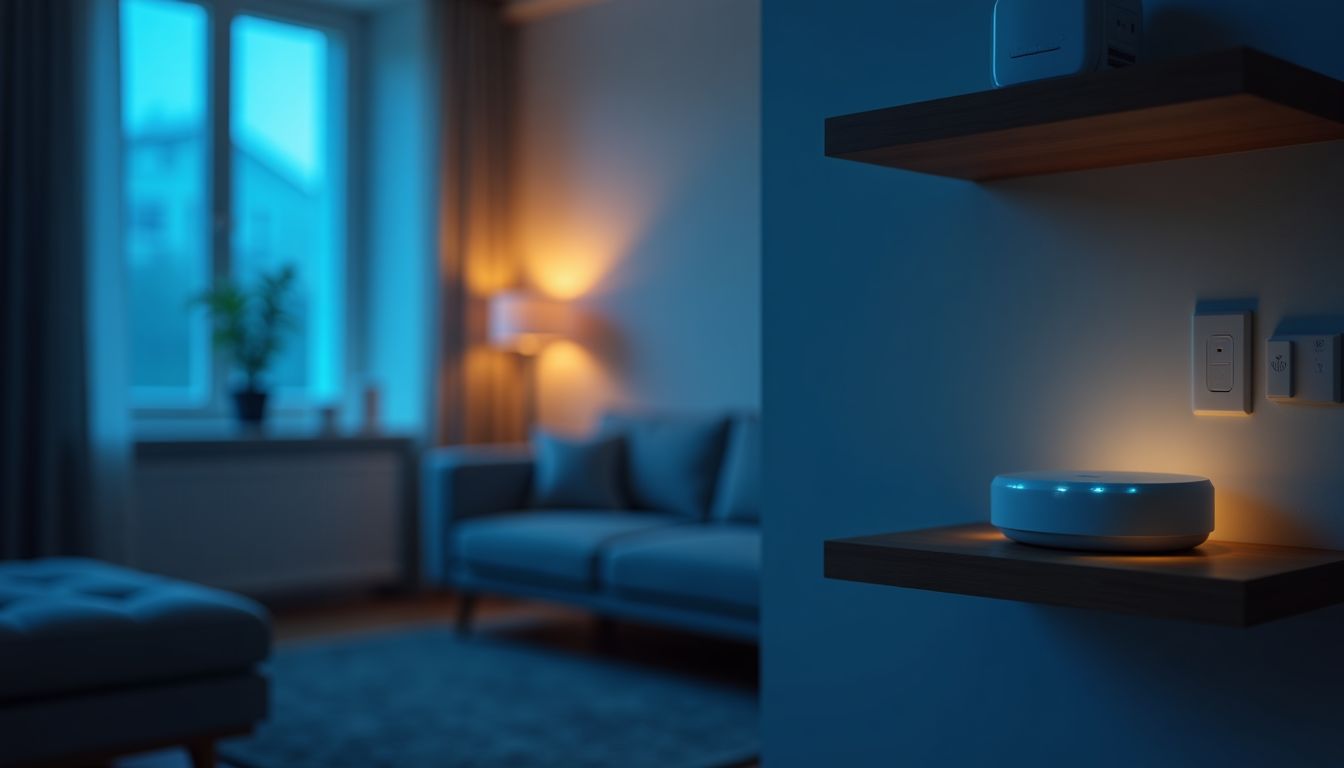
The modern market offers a multitude of home automation solutions, and one of the most popular areas is smart lighting. However, many potential users are deterred by the need to purchase an additional central device — a hub or bridge. Is it possible to get all the benefits of intelligent light without this expensive component, and will you lose functionality? The answer is yes, it is entirely possible, and modern technology allows you to set up smart lighting without a hub, using only a Wi-Fi connection and a smartphone. According to the recommendation of the ComfortShop editorial team, this approach is becoming increasingly popular due to its simplicity and affordability.
? Table of Contents
What is smart lighting and why do you need a hub
Smart lighting is a system that allows you to control light sources remotely, set scenarios, adjust brightness and color temperature. Traditionally, such systems work through a central concentrator (hub), which unites all devices into a single network and provides communication between them and your smartphone.
The hub acts as the "brain" of the system, especially when using Zigbee or Z-Wave protocols. It reduces the load on the home Wi-Fi network and allows you to control devices even without internet access. However, the cost of a quality hub can be significant, making the initial investment in creating a smart home quite substantial.
That is why many manufacturers have started producing devices that connect directly to your Wi-Fi router. Such Wi-Fi smart lighting does not require additional equipment, making it an ideal choice for beginners or those who do not want to complicate the system.
How lighting works without a central hub
The operating principle of such devices is extremely simple. Each smart bulb without a hub or luminaire has a built-in Wi-Fi module. It connects to your home network just like a smartphone or laptop. The manufacturer's proprietary mobile app is used for control.
After installing the bulb and connecting to the network via the app, you gain access to all basic functions: on/off, color change, timer settings, and schedule creation. All commands are transmitted through your router, making smart lighting setup as fast and intuitive as possible.
The main advantage of this approach is the absence of additional costs. You buy a bulb, and it is immediately ready to use. This is an ideal option for apartments where large-scale automation is not planned, or for those who want to try the technology without a big investment.
Advantages and disadvantages of hubless systems
Before purchasing such a system, it is worth weighing all the pros and cons. Like any technology, lighting without a central hub has its strengths and weaknesses.


Main advantages of Wi-Fi solutions:
- Ease of setup: You don't need to understand protocols or buy additional equipment. Everything is done in a few minutes through the app.
- Low entry cost: You can start with one bulb and gradually expand the system without needing to buy a hub.
- Convenient control: Most apps support voice assistants (Alexa, Google Assistant), allowing you to control the light with your voice.
Disadvantages to consider:
- Dependence on Wi-Fi network: If your router is overloaded or the internet goes down, control via the app may become impossible (although the physical switch usually works).
- Limited number of devices: Budget routers may not handle a large number of connected smart bulbs, leading to delays.
- Lack of local scenarios: Complex automations that do not depend on cloud servers are more difficult to implement than with a hub.
ComfortShop experts advise: if you have no more than 10-15 devices and a stable internet connection, Wi-Fi solutions will be an excellent choice.
How to choose a smart bulb without a hub
Choosing the right device is a key step for comfortable use. Hundreds of models are available on the market, so it's worth paying attention to several criteria to make the right choice.
First of all, decide on the base. The most common options are E27 (standard) and E14 (miniature). Also pay attention to the shape of the bulb: it should fit your fixture. The second important parameter is power and luminous flux, measured in lumens (lm). For main room lighting, choose models from 800 lm.
Equally important is the functionality. Do you need color changing (RGB) or are different shades of white light (from warm to cool) sufficient? Warm light is often chosen for the bedroom, while cool light is preferred for a workspace. Also, make sure the manufacturer's app supports Ukrainian and has a clear interface. This will significantly simplify smart lighting setup.
Selection criteria for comfortable use:
- Base type (E27, E14, GU10) and bulb shape.
- Luminous flux (lumens) and power consumption (watts).
- Availability of RGB backlighting or color temperature adjustment.
- Compatibility with voice assistants (Amazon Alexa, Google Home, Siri Shortcuts).
- Quality of the mobile app and frequency of firmware updates.
Popular use cases for Wi-Fi lighting
Smart lighting without a hub opens up many possibilities for automating everyday tasks. Even without a central concentrator, you can create a comfortable and energy-efficient environment in your home.
For example, you can set the light in the hallway to turn on automatically 15 minutes before you arrive home from work. Or program a gradual increase in brightness in the bedroom in the morning, simulating a sunrise and helping you wake up more easily. For children, you can set a timer to turn off the light in their room 30 minutes after bedtime.
Another useful scenario is creating a "presence mode." When you are away, the bulbs can turn on and off in a random order, simulating your usual activity. This is a simple but effective way to enhance home security. All these scenarios are configured in the app without any additional costs.
Conclusion:
Smart lighting without a hub is not only possible but also very convenient for most modern users. Wi-Fi bulbs offer an excellent balance between price, ease of setup, and functionality, allowing you to build your ideal smart home step by step. As ComfortShop reviewers note, this is the optimal choice for those who want to get maximum convenience without complex technical solutions. Start with one bulb, and you will be surprised at how much more comfortable your life can become.
Frequently Asked Questions
Can smart lighting be controlled without a central hub?
Yes, many modern Wi-Fi bulbs and sockets work directly through your home router, without needing a separate hub. Control is done via a smartphone app or voice assistants.
Which bulbs are suitable for a smart home without a hub?
It is best to choose Wi-Fi smart bulbs (e.g., from Xiaomi, TP-Link, or Philips Wi-Fi) that connect directly to your home network. They do not require an additional central device to operate.
How to set up smart lighting if there is no hub?
Simply screw in the bulb, download the manufacturer's proprietary app, connect the bulb to Wi-Fi via your smartphone, and follow the on-screen instructions. The whole process takes a few minutes.
Are there any disadvantages to smart lighting without a central hub?
The main disadvantage is the dependence on the stability of your Wi-Fi and the possible limitation on the number of devices simultaneously connected to the router. Also, automation may be less flexible than in systems with a hub.