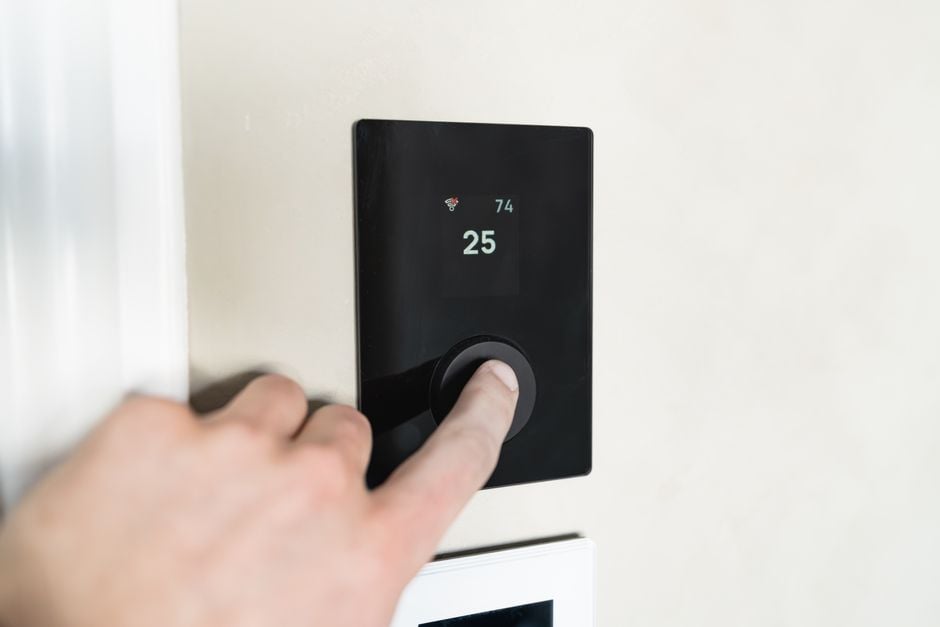
Modern heating is not just about warmth, but also about efficient resource management. A smart thermostat for a gas boiler transforms an ordinary system into a flexible mechanism that adapts to your lifestyle and saves up to 20-30% on gas. It is a device that lets you forget about manual temperature adjustment and constant monitoring of equipment operation. Based on an analysis of specifications, the ComfortShop editorial team notes that choosing the right thermostat is an investment in comfort that pays for itself within one heating season.
Article Contents
- Operating Principle: How a Smart Home Thermostat for a Boiler Controls Heating
- Connection Types: WiFi Thermostat for a Gas Boiler or Radio Channel
- Compatibility: How to Choose a Smart Thermostat for a Specific Boiler
- Functional Capabilities of the Best Smart Thermostats for Heating
- Rating and Selection Criteria: What to Look for in the Specifications
- Conclusion:
Operating Principle: How a Smart Home Thermostat for a Boiler Controls Heating
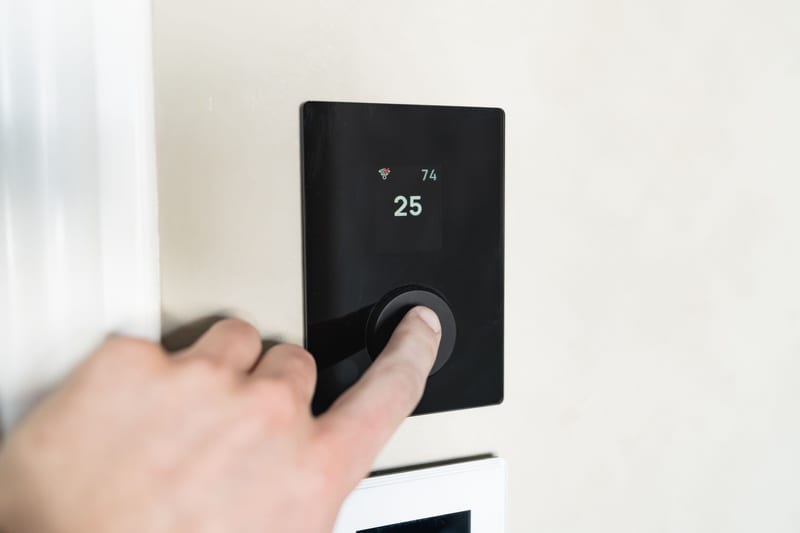
Unlike mechanical regulators that simply turn the burner on or off, a smart thermostat for a gas boiler analyzes numerous parameters. It tracks not only the current room temperature, but also the rate of its change, the inertia of the heating system, and even the weather forecast if connected to the internet.
The main difference lies in the modulation algorithms. The device does not simply send an "on/off" command, but instead regulates the flame power using the OpenTherm protocol or pulse-width modulation. Thanks to this, the boiler operates longer, but at minimum power, avoiding constant cycling, which causes the most wear on the heat exchanger and increases fuel consumption.
A smart home thermostat for a boiler also takes into account the thermal inertia of the building. It "understands" that heating a concrete screed takes time and starts heating in advance so that the temperature reaches a comfortable 22°C by the time you wake up. This is a key feature that distinguishes truly intelligent control from a simple programmer.
Connection Types: WiFi Thermostat for a Gas Boiler or Radio Channel
The method of communication between the thermostat and the boiler determines installation convenience and functionality. Wired connection remains the most reliable — it does not depend on battery charge and is not susceptible to interference. However, it requires laying a cable, which is not always possible during renovation.

A wireless WiFi thermostat for a gas boiler consists of two units: a receiver near the boiler and a room module. They exchange data on the 868 MHz frequency. After analyzing open sources, the ComfortShop editorial team recommends paying attention to models with two-way communication — they not only send a command but also receive confirmation of execution and diagnostic codes from the boiler, which is critical for safety.
The WiFi module within the thermostat serves a different function — it connects the device to your home router for remote control via smartphone. Do not confuse the radio link with the boiler and WiFi for the internet: these are two different radio modules, and the presence of WiFi does not mean the thermostat itself is wireless concerning the boiler.
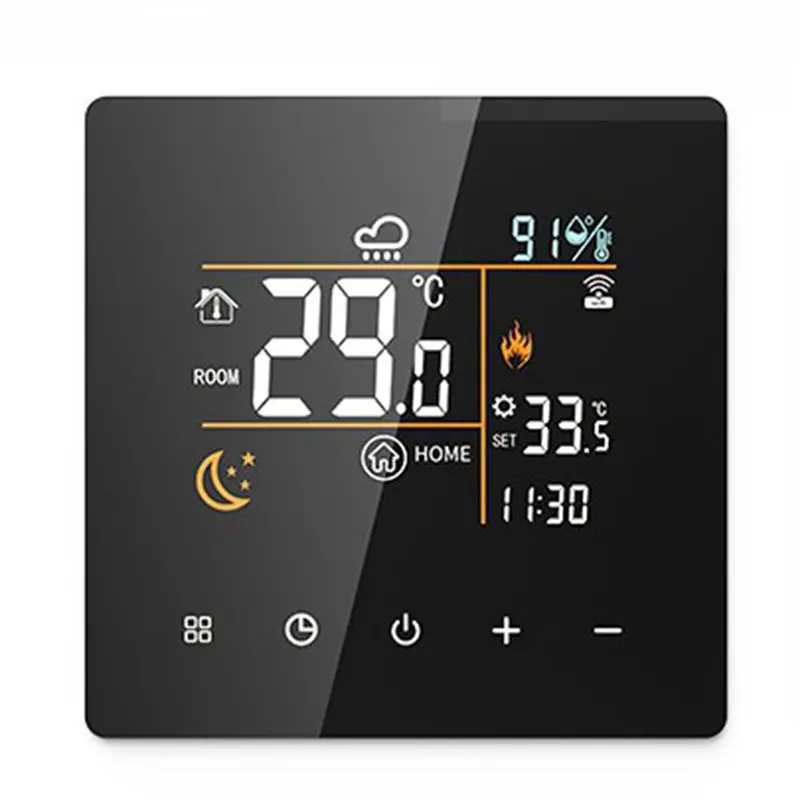
Compatibility: How to Choose a Smart Thermostat for a Specific Boiler
The most common mistake is buying a device without checking its compatibility with the boiler model. Modern gas appliances support the digital OpenTherm protocol, which allows the thermostat to control flame modulation. If your boiler operates only on a relay principle (dry contact), you will not get savings from modulation, even if you buy the most expensive device.
What to pay attention to when checking compatibility:
- Control voltage: most wall-hung boilers use 230V, while a floor-standing thermostat often requires a potential-free relay.
- Protocol: OpenTherm, EMS (Bosch), eBUS (Vaillant) — proprietary buses require proprietary thermostats.
- Terminal block availability: older non-volatile boilers may not have a connector for connecting external control.
According to the ComfortShop editorial team's recommendation, before purchasing, it is worth photographing the boiler's control board or finding its electrical diagram in the manual. This will help avoid a situation where the thermostat physically cannot be connected without interfering with the warranty automation.
Functional Capabilities of the Best Smart Thermostats for Heating
Basic functionality includes programming a weekly schedule with hourly detail. But the best smart thermostats for heating offer much more: geolocation that automatically lowers the temperature when all residents have left the house, and an adaptive algorithm that self-learns based on the room's heat loss.
Geo-fencing works via the smartphone's GPS. The system detects that you are approaching home and raises the temperature in advance from economy mode to comfortable mode. This is more convenient than a fixed schedule, as your schedule may change.
Integration into smart home ecosystems is another criterion for choosing a thermostat for a smart home. Support for Apple HomeKit, Google Home, or specialized hubs like Ajax allows you to create scenarios: for example, when a window is opened for ventilation, the sensor sends a signal to the thermostat, and it temporarily turns off the heating so as not to heat the outdoors.
Rating and Selection Criteria: What to Look for in the Specifications
A formal rating does not always reflect the real picture, since an ideal thermostat for an apartment with centralized heating will be useless in a private house with a floor-standing boiler. We have systematized the key technical parameters that truly affect operation.
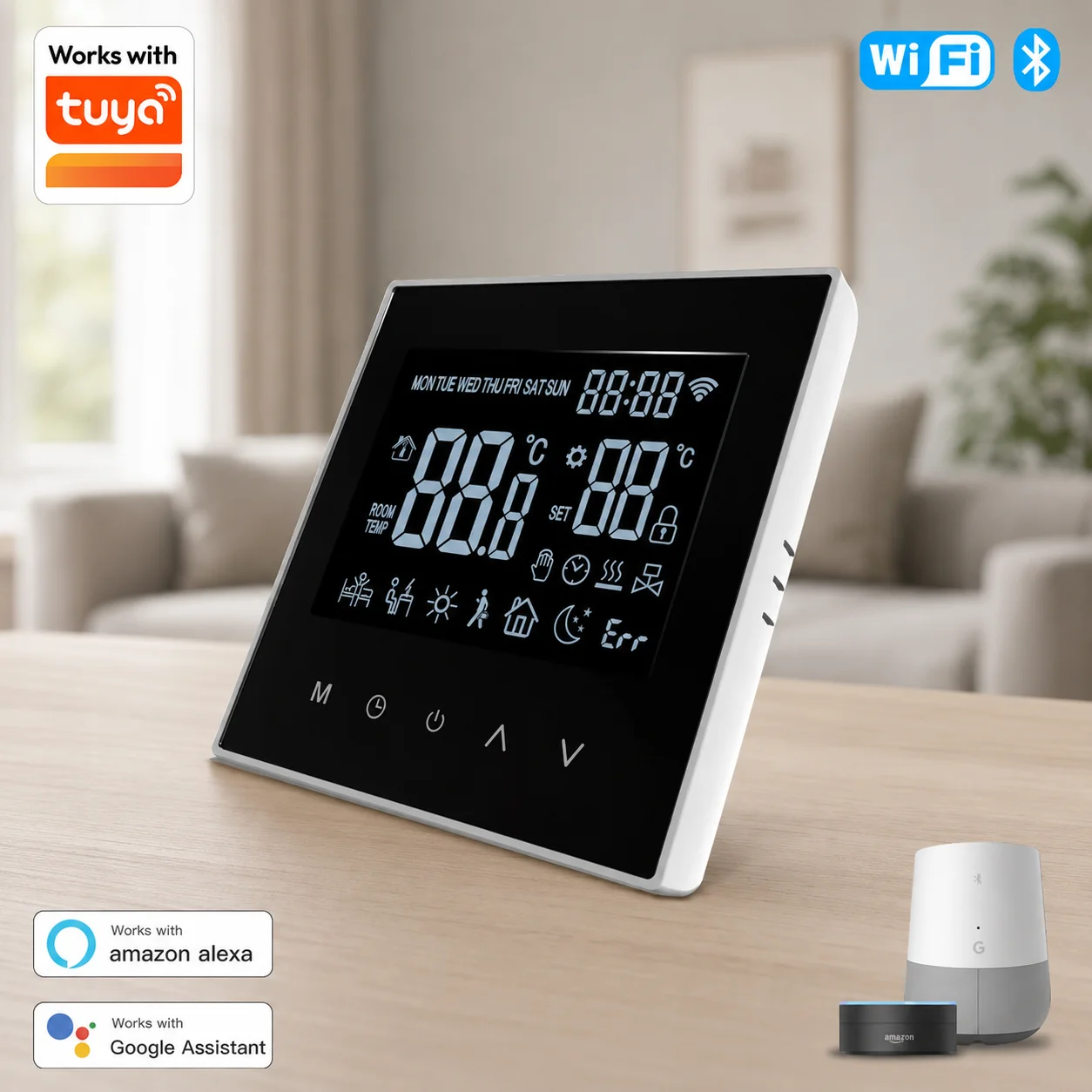
Technical criteria worth analyzing first:
- Hysteresis: the difference between the switch-on and switch-off temperature. The smaller it is (0.1-0.2°C), the more stable the microclimate.
- Control range: underfloor heating requires a mode from +5°C, radiator heating — up to +35°C.
- Freeze protection: automatic boiler activation when the temperature drops below +5°C — a mandatory option for dachas and homes with occasional occupancy.
- Power type: batteries are convenient for installation but require replacement once a year; 230V mains power is more reliable.
Based on the analysis of specifications, ComfortShop recommends paying attention not to the touchscreen design, but to the availability of certification for operation with a specific boiler model. Even a budget thermostat with the correct protocol will provide more savings than a premium one connected only as a relay switch.
Conclusion:
Choosing a thermostat for a smart home comes down to three key decisions: checking compatibility with the boiler, choosing between wired and wireless connection, and determining the required level of intelligence — from a simple programmer to a self-learning system with geolocation. After analyzing the market, the ComfortShop editorial team advises not to skimp on the communication protocol: it is digital control of flame modulation that provides the main gas savings, while WiFi and design are merely convenient additions. A properly selected smart thermostat for a gas boiler transforms chaotic fuel combustion into a precisely calculated process of maintaining comfort, where every cubic meter of gas is used rationally.
Frequently Asked Questions
Does any smart thermostat fit a gas boiler?
No, it is important to check the thermostat's compatibility with your boiler model, as different manufacturers use different connection protocols (for example, OpenTherm or relay output).
How does a smart Wi-Fi thermostat help save gas?
It automatically lowers the temperature when you are not at home and adjusts the heating schedule to your daily routine, which can reduce heating costs by up to 30%.
Is it difficult to install a smart thermostat for a boiler yourself?
Most models have simple installation following the instructions, but if you are unsure about electrical work or boiler compatibility, it is better to contact a qualified specialist.
Which functions are most important when choosing a thermostat for a smart home?
The key ones are support for your boiler's protocol, geolocation for the "home/away" automatic mode, integration with voice assistants, and a convenient mobile application.