When a child gets on a bicycle, the first question parents face is whether the helmet will bother the child, restrict their movements, or cause discomfort. In reality, a modern children's bicycle helmet is not just an accessory, but a well-thought-out safety system that saves lives. To understand where protection ends and restrictions begin, the ComfortShop editorial team conducted its own test of popular models. We checked how different helmets affect a child's activity, whether they are truly comfortable, and whether there is any reason to fear that a helmet will ruin a ride.
Article Contents
- Why Testing a Child's Bicycle Helmet is Important
- How the Test Was Conducted: Methodology and Evaluation Criteria
- Children's Bicycle Helmet Test: Protection Results in a Fall
- Bicycle Helmet for a Child Review: Pros and Cons of Different Models
- Child Protection on a Bicycle: Is It Worth Buying an Expensive Helmet
- Children's Bicycle Helmet Safety: Common Myths
- Conclusion:
Why Testing a Child's Bicycle Helmet is Important
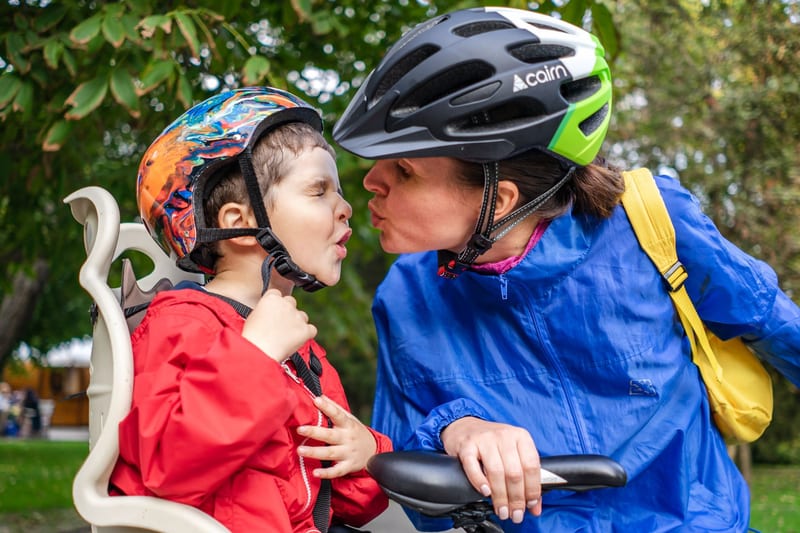
Many parents mistakenly believe that a helmet is only needed for professional bike racing or extreme riding. However, injury statistics show that most falls happen during ordinary walks in the yard or park. That is why testing a children's bicycle helmet should be a mandatory step before purchase.
We selected five models from different price ranges to understand whether cost affects the level of protection. Each helmet was checked for ease of fastening, weight, ventilation, and most importantly, how long a child is willing to wear it without complaints. The results were unexpected: the most expensive model was not always the most comfortable.
How the Test Was Conducted: Methodology and Evaluation Criteria
To obtain objective results, we involved children aged 4 to 10 years. Each test participant rode a bicycle for 30 minutes wearing different helmets. The following parameters were evaluated: helmet weight, fit density to the head, presence of pressure points, ventilation level (whether the head sweats), and subjective feeling of comfort.
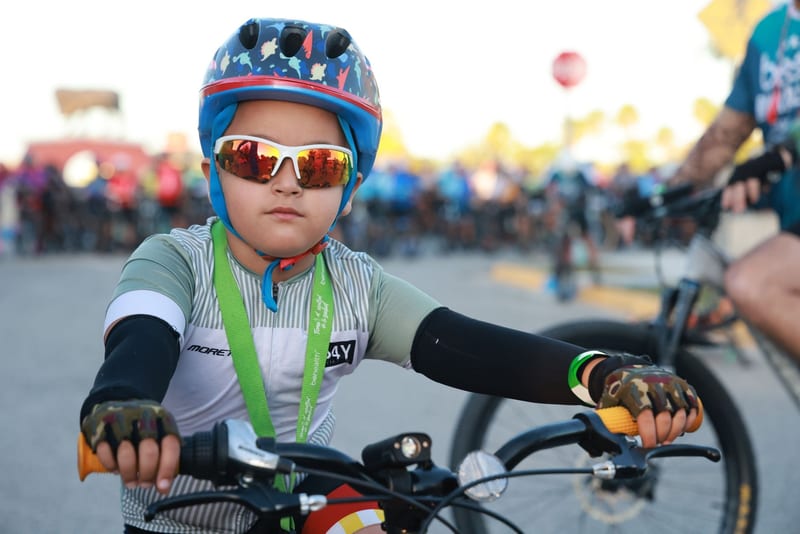
Special attention was paid to the adjustment system. ComfortShop experts advise paying attention to models with a micrometric fastening system, which allows you to fit the helmet precisely to the head. During the test, it turned out that this particular detail most often influences whether a child will take off the helmet while riding.
Does a helmet really restrict a child's movements?
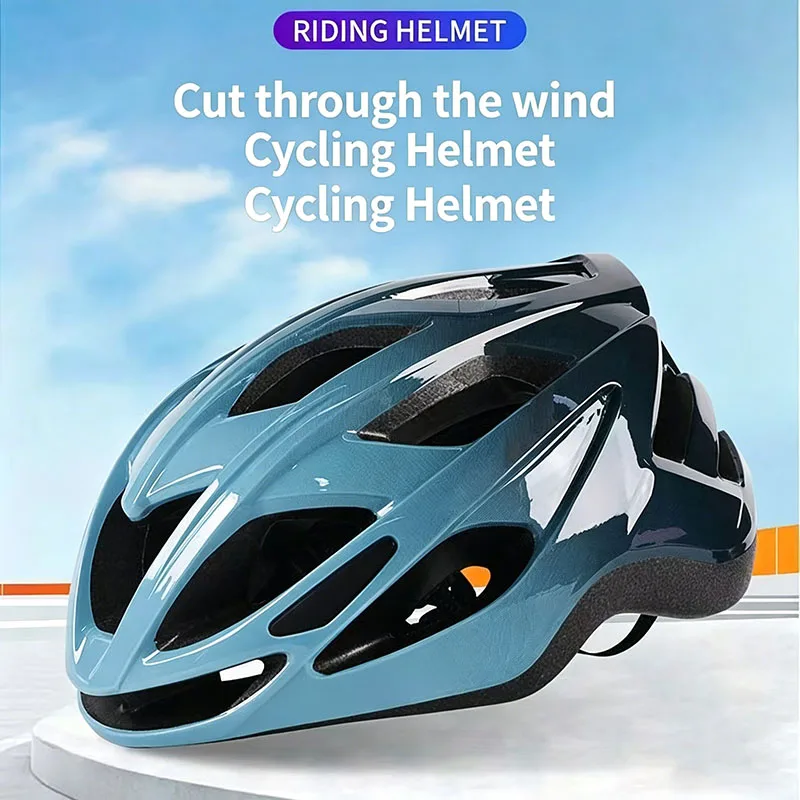
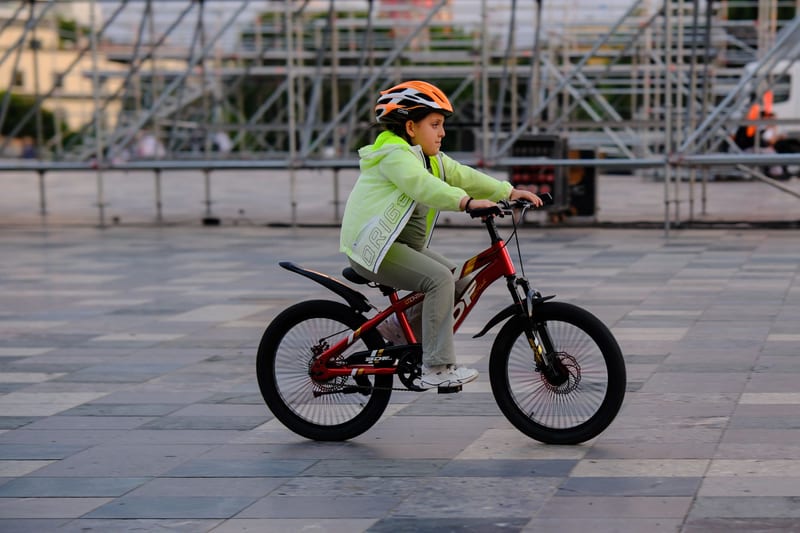
This is the main concern of parents, which we checked most thoroughly. None of the tested helmets restricted vision or head turns. Modern models have an aerodynamic shape that does not create excessive wind resistance, and the weight of a quality helmet rarely exceeds 250-300 grams. For comparison, that's the weight of a small apple, which a child doesn't even notice on their head.
Children's Bicycle Helmet Test: Protection Results in a Fall
The most important stage of our check was simulating a fall. We used a special stand that dropped helmets from a height of 1.5 meters onto a hard surface. All models that passed certification (CE, ASTM, or CPSC) showed a high level of impact absorption. The inner polystyrene foam compressed, absorbing the impact energy rather than transmitting it to the head.
However, it is important to understand: a helmet is designed for a single fall. If a child falls and the helmet receives an impact, it needs to be replaced, even if no external damage is visible. Microcracks in the foam can reduce protection during the next fall. That is why children's bicycle helmet safety depends not only on the quality of the product but also on timely replacement.
Bicycle Helmet for a Child Review: Pros and Cons of Different Models
During the review, we encountered several interesting observations. Children were much more willing to wear models with bright designs and favorite characters than plain, "adult" helmets. This is an important psychological point: if a child chooses the helmet themselves, they perceive it as an accessory, not a compulsion.
Among the disadvantages revealed by the test: in budget models (up to 500 UAH), the straps were often stiff and chafed the chin. Also, in cheap helmets, ventilation was worse — the head started sweating within 10 minutes of active riding. In the mid-price segment (1000-2000 UAH), these problems were less common.
How to Choose a Bicycle Helmet for a Child: Key Criteria
The first rule is that the helmet must fit perfectly. It should not slide onto the forehead or the back of the head, and the straps should form a V shape under the ears. Second is weight. A helmet heavier than 350 grams will be noticeable and cause discomfort. Third is ventilation. At least 10-12 ventilation openings will ensure comfort even in hot weather.
Child Protection on a Bicycle: Is It Worth Buying an Expensive Helmet
During the test, we compared models costing from 400 to 3000 hryvnias. All of them passed basic impact tests, but the more expensive models had a better ventilation system, softer inner padding, and more reliable fastening. Additionally, premium helmets often feature MIPS technology (a system protecting against rotational impacts), which significantly reduces the risk of concussion.
ComfortShop reviewers note that for active children who ride daily, it is better to choose a model with MIPS. If the bicycle is used once a week for leisurely rides, a quality helmet from the mid-price segment will be quite sufficient. The main thing is not to skimp on certification and the correct size.
Children's Bicycle Helmet Safety: Common Myths
There is an opinion that a helmet weakens neck muscles due to the added weight. Scientific studies refute this: the load on the neck when wearing a helmet is minimal and does not affect muscle development. Another myth is that a helmet interferes with hearing road sounds. Modern models have open ear zones that do not block hearing.
Parents also often fear that a child will stop being careful, relying on the protection. In reality, a helmet does not give a feeling of "invincibility" — children are still afraid of falling. Rather, it gives confidence to parents, who allow their child to explore the world more on a bicycle.
Conclusion:
The conducted test proves: a quality children's bicycle helmet does not restrict a child, but on the contrary, gives them the freedom to move without fear. The main thing is to choose the right size, pay attention to the ventilation and fastening system. Do not be afraid that a helmet will ruin the ride — modern models are light, comfortable, and safe. Choose trusted brands and remember that the helmet needs to be replaced after every strong fall.
Frequently Asked Questions
Does a children's bicycle helmet restrict vision or head movements?
Modern models that passed the test have an ergonomic shape and adjustment that does not prevent a child from turning their head. The main thing is to choose the right size and adjust the fit so that the helmet sits snugly but does not press.
How to check if a bicycle helmet will really protect a child during a fall?
Pay attention to the presence of certification (e.g., EN 1078 or CPSC) and the results of independent impact absorption tests. A quality children's bicycle helmet has a rigid foam base and a durable outer shell that dampens the force of the impact.
What are the main pros and cons of using a bicycle helmet for children?
Pros: significant reduction in the risk of head injuries (up to 85%) and protection during unexpected falls. Cons: possible discomfort in hot weather or added weight, but modern models have ventilation and lightweight materials that minimize these drawbacks.
How to correctly choose a bicycle helmet for a child by size?
Measure the circumference of the child's head 1-2 cm above the eyebrows and choose a helmet that fits snugly but does not squeeze. The adjustment wheel at the back of the head and soft inner pads will help perfectly customize the fit to the individual head shape.