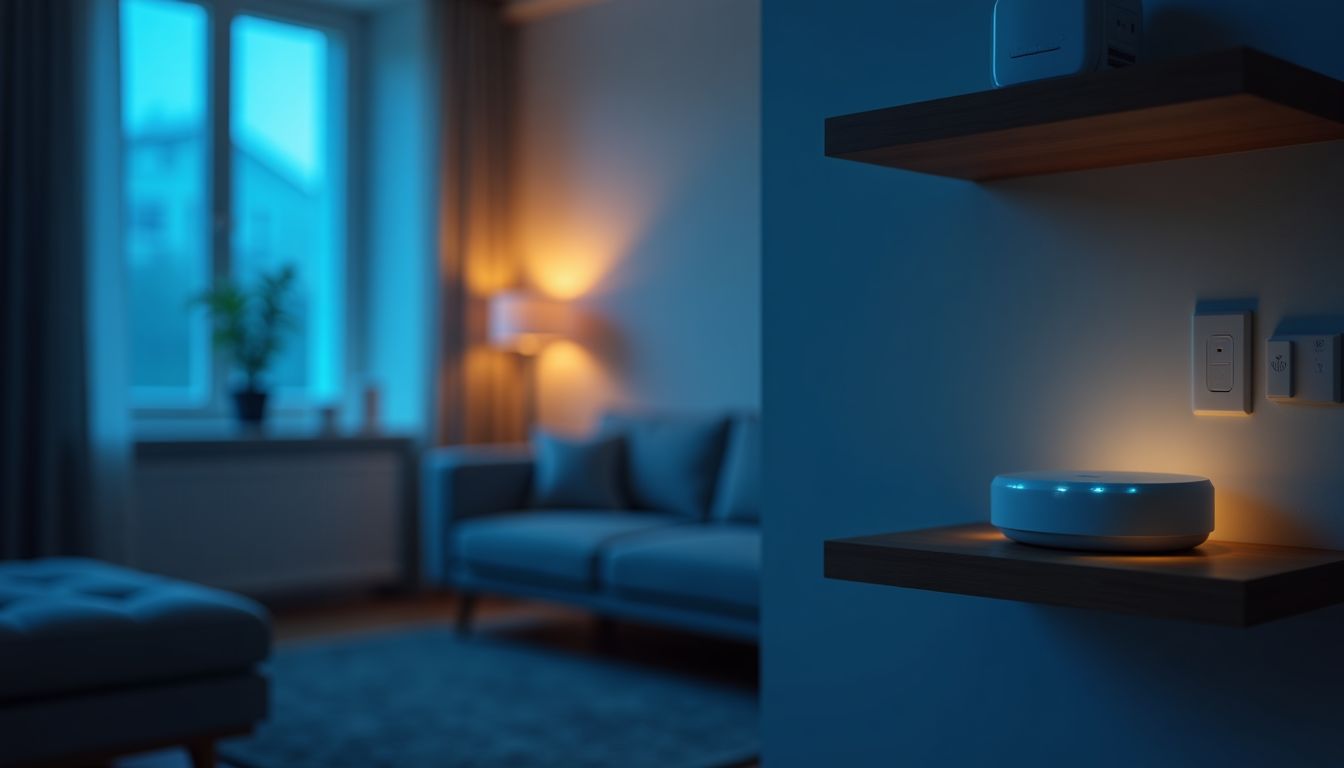
A smart home has long ceased to be a novelty, but most users only use basic functions: turning on lights from a smartphone or checking a camera. The true potential of the technology is revealed when devices start working together, reacting to context, time, and the habits of the residents. That is why non-obvious smart home scenarios become the tool that transforms a set of gadgets into a cohesive system of care for comfort. In this article, we will look at solutions that are rarely described in manuals but which genuinely change the quality of life.
Article Contents
- DIY Home Automation: Where to Start Unconventionally
- Hidden Smart Home Features Manufacturers Don't Mention
- Automation Scenarios for an Apartment: From Morning to Night
- Smart Home Unconventional Solutions for Health and Mood
- Everyday Automation for Life: Less Routine, More Time
- How to Create Your Own Unconventional Scenario: Step-by-Step Logic
- Conclusion:
DIY Home Automation: Where to Start Unconventionally
When people talk about DIY home automation, they usually imagine complex circuits, soldering irons, and programming. In reality, most unconventional ideas can be implemented using ready-made hubs and simple sensors that easily integrate with each other. The main thing is to abandon the template thinking of "motion sensor turns on the light" and look at everyday life more broadly.
For example, a window opening sensor can not only signal a draft but also automatically turn off the air conditioner or heating in the room. This is a simple yet very effective scenario that saves energy and increases safety. Such solutions do not require deep technical knowledge but deliver tangible results immediately after setup.
According to the recommendation of the ComfortShop editorial team, it's best to start by analyzing your own daily routines: which actions repeat, what annoys you, where time is lost. These points will become the foundation for your first personalized scenarios that are not described in any standard manual.
Hidden Smart Home Features Manufacturers Don't Mention
Most devices have capabilities that are not advertised in marketing materials. These are hidden smart home features that are only revealed through a deeper look into settings or via third-party applications. For example, many smart lamps support not just brightness changes but also sunrise simulation, which gradually prepares the body for waking up much more gently than a harsh alarm clock.
Another underestimated scenario is using smart plugs to control the energy consumption of devices in standby mode. TVs, microwaves, chargers — all of these consume electricity even when turned off. Automatically cutting power to these points at night can reduce bills by 5–10% each month. This is not just convenience but real savings that are hard to notice without data analysis.
After analyzing open sources, the ComfortShop editorial team notes that the most interesting hidden capabilities often appear after firmware updates. Therefore, it's worth regularly checking the changelog of your devices — new triggers and conditions for scenarios are often hidden there.
Automation Scenarios for an Apartment: From Morning to Night
An apartment has its own specifics: limited space, neighbors, centralized utilities. Therefore, automation scenarios for an apartment must account for these features. For example, a water leak sensor under the bathtub can not only send notifications but also automatically shut off the water supply via a smart valve. This saves you from flooding your neighbors and expensive repairs.

A morning scenario can include not only lights and coffee but also automatically opening curtains on a schedule, turning on the heated floor in the bathroom 20 minutes before waking up, and starting the air purifier at a low speed. In the evening, the system can check whether all windows and doors are closed, and if not, remind you with a soft light signal instead of an alarming sound.
Special attention deserves the "nobody home" scenario: when all residents have left the apartment, the system automatically turns off the lights, lowers the heating, activates the security mode, and switches smart cameras to motion-based recording. Returning home triggers the reverse process — all without pressing a single button.
Smart Home Unconventional Solutions for Health and Mood
Smart home unconventional solutions can also offer care for well-being. For example, an air quality sensor can start the exhaust fan or humidifier when CO₂ levels exceed the norm. This is especially relevant for the bedroom, where high carbon dioxide concentration impairs sleep and causes morning fatigue.
Lighting scenarios can change color temperature throughout the day: cool light in the morning for alertness, warm light in the evening for relaxation. Automating this process helps synchronize circadian rhythms, which positively affects productivity and rest quality. Such solutions do not require complex equipment — smart lamps and a basic hub are enough.
For people who work from home, a "focus mode" scenario will be useful: with a single press or voice command, the system dims the light to a working level, turns on white noise, and blocks notifications on smart screens. This helps you get into a working state faster and get distracted less.
Everyday Automation for Life: Less Routine, More Time
The main value of any automation is reclaiming time. Everyday automation for life means the system takes over small but constant tasks that eat away minutes every day. Watering flowers on a schedule based on soil moisture, automatically closing curtains in the heat to keep the room cool, turning on the heated towel rail before an evening shower — all of this works unobtrusively but creates a feeling of care.
A smart vacuum cleaner can start not just on a schedule but when everyone has left the house — presence sensors detect an empty apartment and trigger the cleaning command. A smart washing machine can delay the start of a cycle to a time when electricity tariffs are cheaper. These are the little things that seem insignificant individually but together save hours every week.
Based on feature analysis, ComfortShop recommends paying attention to devices with open APIs or support for popular ecosystems. This allows you to combine equipment from different brands into a single system and create truly individual scenarios that are not limited by the manufacturer's vision.

How to Create Your Own Unconventional Scenario: Step-by-Step Logic
Creating non-obvious smart home scenarios starts not with buying devices but with observing your own life. Over the course of a week, write down all the actions you regularly perform at home. Mark those that cause irritation or take more time than you'd like. These are the candidates for automation.
Next, define the trigger, condition, and action. For example: trigger — time 11:00 PM, condition — all windows are closed, action — turn on night mode. The more conditions you think through, the smarter the system will be. But don't immediately create complex multi-level chains — start with simple scenarios and gradually increase complexity.
Test each scenario for several days before adding a new one. Sometimes automation that seems logical turns out to be inconvenient in real life. Flexibility and a willingness to adjust are key skills for creating a truly useful smart home.
Висновок:
The true value of a smart home is revealed not in the number of devices but in well-thought-out scenarios that account for your specific lifestyle. Unconventional solutions — from automatic water shut-off to lighting scenarios for healthy sleep — can make everyday life more comfortable and safer. Experiment, analyze your habits, and gradually build a system that works for you, not the other way around.
Frequently Asked Questions
What unconventional smart home scenarios can be implemented in a regular apartment?
In addition to standard light switching, you can set up a "night route" scenario with baseboard lighting, automatic ventilation based on a CO2 sensor, or a "movie" scenario with dimmed curtains and lowered device volume.
Is it difficult to do home automation yourself without hiring an integrator?
Most modern systems based on Zigbee or Wi-Fi are configured through a mobile app in 15-30 minutes, so basic scenarios are quite feasible to set up on your own with basic technical skills.
Which hidden smart home features will help save on utility bills?
The most effective are scenarios that disconnect "energy vampires" (TVs, computers) in standby mode, as well as automatic heating control depending on the presence of people in the room and the time of day.
How can home automation increase safety if I often travel on business trips?
Set up a "presence simulation" scenario that randomly turns on lights and music in different rooms, as well as an emergency water shut-off scenario in case of leaks — this minimizes the risks of flooding neighbors and burglaries.